Stop being a resume.
500 applications and zero callbacks means nobody can see what you can do. Tech Residency is eight weeks of real work on a real team, scored on camera. You leave with proof an employer can watch.
You will join: marketing, operations, engineers, sales, finance, HR, program management, analysts.
Full refund through the end of week two.
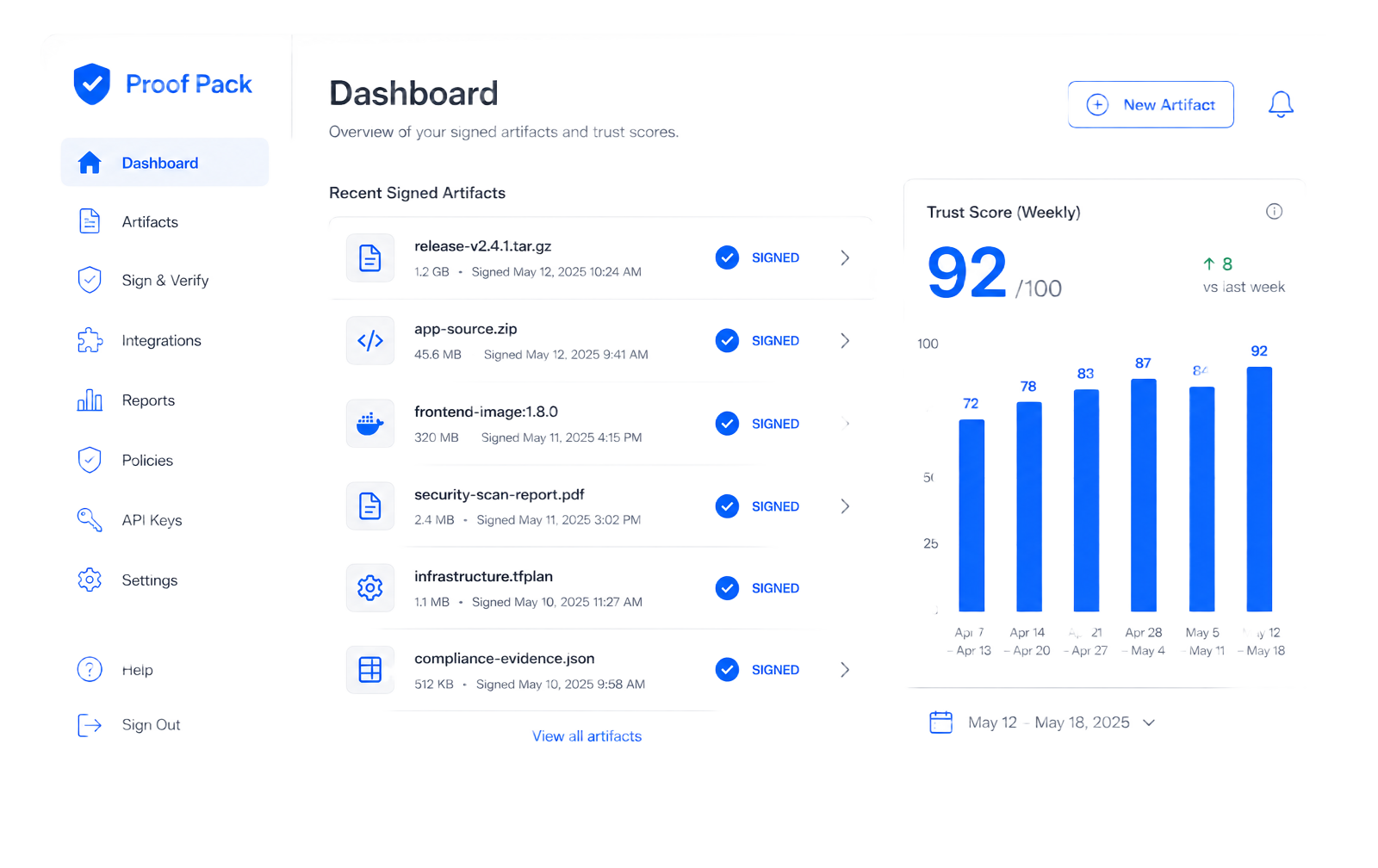
Not Ready To Join The Residency? Join Our Free Webinar to See it Live.
There are now 250+ applicants for every job posting, up from 46 in 2021. 88% of employers admit their own system screens out qualified people. Only 20% of capable candidates ever reach a human being.
The interview stopped working.
Employers can't tell a capable person from a well-prepared one. So they stopped calling strangers back.
Eight weeks. Three moves.
Take a seat on a team.
Pods of four or five, twenty seats a cohort. A real project for a real employer, or one you pitch. About 20 hours a week.
Do the work.
A daily standup, then three to four hours building with your team. Every week you defend the work on camera to an independent expert, and it gets scored.
Leave with the Proof Pack.
The repo, the decision record, the scores, and four recorded defenses. When a hiring manager asks what you can do, you send a link.
Weekdays
Monday through Friday, 20 hours a week.
Weekends
Saturday and Sunday, 20 hours a week.
Founder-led project
You bring the idea. The team builds it with you, on a real clock.
Employer project
A partner company's real backlog item, delivered to a real stakeholder.
You choose both when you apply, after you pay. Both refundable choices, like everything else until week two.
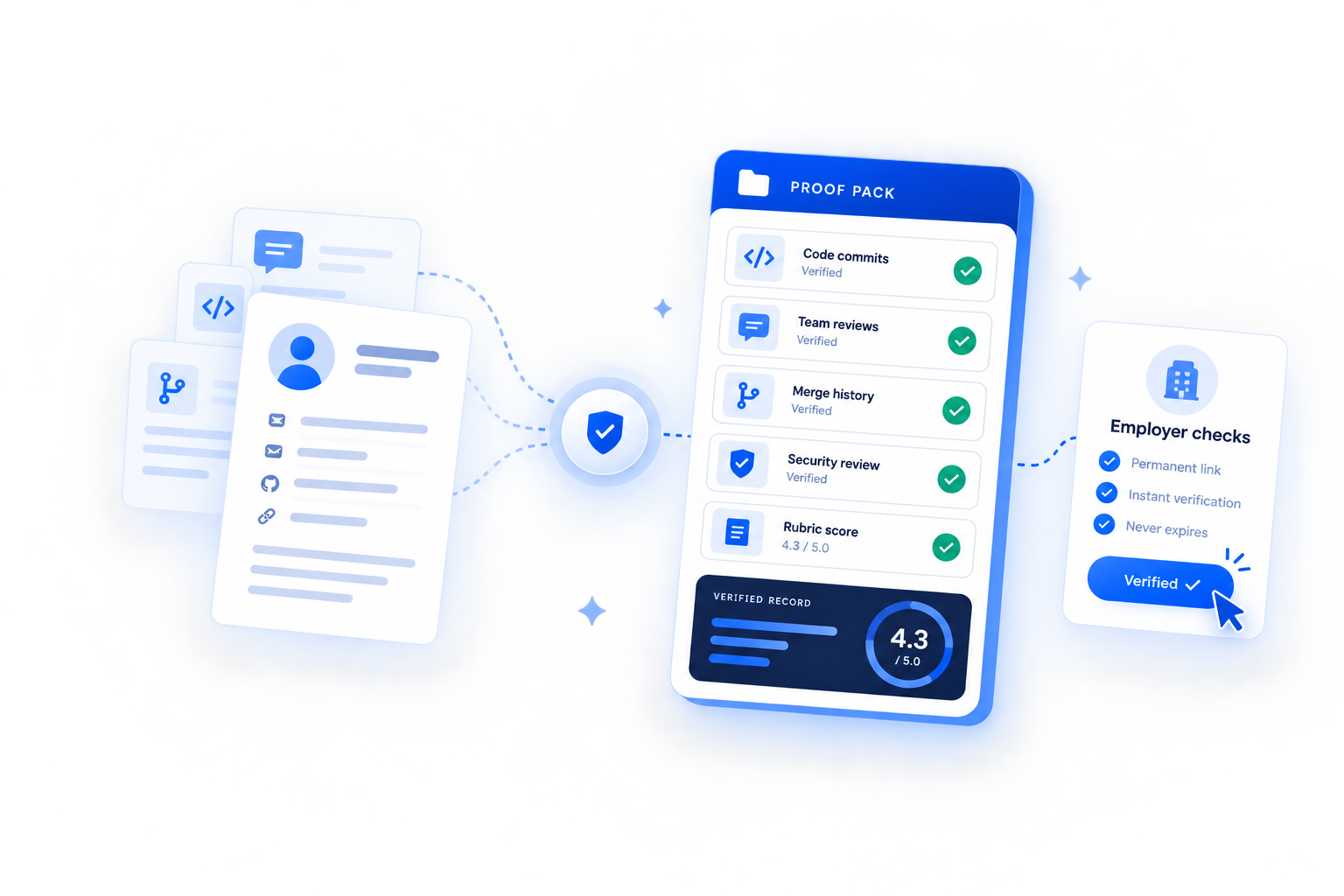
One link. An employer checks it in minutes.
- The work itselfReal contributions to a real team project.
- Four recorded defensesLive questioning on camera, unedited.
- A scored evaluationAgainst a rubric published before you start.
- A security reviewThreat model, findings, what you did about them.
- A decision recordWhat the team chose, rejected, and why.
- Independent expert sign-offA named reviewer staking their reputation.
A low score stays in your Proof Pack next to the high ones. That is why an employer believes the high ones.
Medicine figured this out a century ago.
Nobody hires a doctor off a transcript. Between the degree and the career there's a residency: supervised real work, scored by people whose reputation rides on the judgment. Tech never built one. So we did.
There's no curriculum, only the work, scored by three layers that don't report to each other. You meet the expert who scores you on a call before the cohort starts, while your refund is still on the table.
- Level one · WeeklyAn industry expert
Scores your work every week on camera, against a published rubric.
- Level two · Third partyAn independent framework
A standardised assessment scores the same work without knowing you.
- Level three · The sponsorThe employer whose project it is
The company that submitted the work gives the final assessment at Showcase Day.
This format wasn't invented for this cohort. We ran it inside companies for two years. Fruitist, an agriculture company doing around $400 million in revenue, paid to put its own engineers through it. Then paid to do it again.
Residents have left this format and landed offers faster, and at higher pay, than applicants with the same background on paper. We're auditing those numbers before we print them, because you've seen enough made-up stats. When they publish, you'll be able to check them.
$2,500. Two ways to pay it.
Pay → Application → Seat confirmed within 3 business days
Not a fit after review: 100% refunded the same week. Leave before the end of week two: 100% refunded.
- Eight weeks on a team of five, a program manager running the day
- Weekly scored review by an independent expert
- A verified, hosted Proof Pack you own
- Showcase Day in front of industry reviewers
- The full AI toolchain, paid for
- Recruiter introductions
Everything you need to know
Taken from what people actually write about this industry. We are not going to pretend you have not read them.
"Is there a job guarantee?"+
No. Programs that sell guarantees are financing them out of your salary. We sell eight weeks of real, scored, recorded work. What we guarantee is that you'll leave holding evidence nobody else in the pile has.
"I can build a portfolio and learn this on my own."+
Nobody reads portfolios, because everyone's portfolio has the same three tutorial projects. That's the point of the recordings. Reading a repo takes an hour and proves little. Watching a candidate defend a decision takes five minutes and settles the question.
"Who is actually behind this?"+
The team behind Tech Residency has run this working format inside companies for two years.
"Eight weeks is not long enough to matter."+
Eight weeks is not long enough to learn a profession from zero, which is why we don't take people starting from zero. It is long enough to produce a shipped project, four defended decisions, and eight scored reviews. That's more verifiable evidence than most people produce in two years of employment.
"Is it too late at 33? At 45?"+
The room is built for people with professional experience. If anything, the residency favors people who have run projects, managed stakeholders, and shipped things before. What you're missing is proof you can do it with AI. That's the eight weeks.
"What if I do not make the bar?"+
If we review your application and you're not a fit, every dollar comes back the same week. If you're in and it isn't working, leave before the end of week two for a full refund. After that, the honest answer: some residents score low. The low scores stay in the record, and the record is still yours.
Twenty seats. Then it starts.
Enrollment closes when the seats fill, or October 5, whichever comes first.
Two minutes. Refundable through week two.
Two ways to pay it.
Either way: full refund through the end of week two, and a full refund if we decide you're not a fit. See the full terms